Emory Health Now Blog

Little eyes – big research

August 11, 2010

Having a newborn and managing all that comes with caring for that new little one is a big job. Add to that frequent trips to the ophthalmologist following a cataract surgery—yes, cataract surgery on a baby—and you might have highly stressed parents. But the parents of little James and slightly older M.J. seem unfazed by all the medical appointments and additional duties that go along with caring for their young sons.

M.J. Burkett and James Weeks became patients in the IATS trial, which has treated 114 babies across the United States.

Both the boys, like 300 babies each year in the United States, were born with a cataract in one eye. In an infant, if the affected eye isn’t surgically addressed within the first few months of life, that eye will not develop properly and vision can be permanently lost. These boys and their parents and 112 other young patients and their families have participated in the Infant Aphakia Treatment Study (IATS), a nationwide, multi-center clinical trial based at the Emory Eye Center. The 10-year study will evaluate whether replacing that lost lens with a contact lens or an intraocular lens (IOL) is preferable.

Adults typically get an IOL implant following cataract surgery. In the past, standard treatment was a contact lens for these babies. IATS randomized children into two groups: those who received IOL implants and those who received contact lenses. Those with IOLs also received glasses for residual vision correction. And both groups had daily patching of the unaffected eye to make sure that the newly corrected eye could become strong.

A team of professionals from Emory and beyond came together to provide the many layers of data necessary for the study. They included experts from the Rollins School of Public Health and the Department of Epidemiology and Data Coordinating Center in the Department of Biostatistics and Bioinformatics, as well as a visual acuity tester from the University of Alabama, Birmingham, who traveled to all sites to check these children.

For more information about IATS, read the feature article “One Big Question: Ten Diligent Years” in Emory Eye magazine’s summer 2010 issue.

Linking academic and public health institutions in disaster response

July 28, 2010

How can academic institutions, with their healthcare resources, faculty expertise, and students work most efficiently in responding to public health disasters along with public health agencies and non-governmental organizations (NGOs)? A conference at Emory this week explored the symbiotic relationship that, with proper planning, can turn these diverse institutions into a powerful public health response team.

The conference was co-hosted by the Southeastern Center for Emerging Biologic Threats (SECEBT) – an Emory-led partnership of academic institutions and public health agencies. Other conference sponsors were the Southeast Regional Center of Excellence for Emerging Infections and Biodefense (SERCEB), led by the University of North Carolina at Chapel Hill, Emory’s Office of Critical Event Preparedness and Response (CEPAR), and the Preparedness and Emergency Response Research Center (PERRC) at the Rollins School of Public Health.

The “Disaster Response Utilizing Academic Institutional Resources” conference brought emergency preparedness and response officers from southeastern universities together with local, state and government public health representatives, NGOs, and nonprofits.


Read more…

Rollins School of Public Health describes Haiti experiences

June 10, 2010

Emory University’s Rollins School of Public Health recently collected stories of experiences that students and faculty had in Haiti after the earthquake, and the contributions were featured in the newest Emory Public Health magazine. Read excerpts and view a video below.


Read more…

Hold out your finger: Epidemiologist developing test for colon cancer risk

April 15, 2010

Years from now physicians may be able to determine whether you’re at increased risk for colorectal cancer by drawing blood from the tip of your finger.

Emory University researchers are working to identify biomarkers to detect a person’s chances of developing colon cancer. Much like blood pressure and cholesterol tests can indicate heart disease risk, researchers here hope that some day the makeup of blood and urine will be able to tell who’s at risk for colorectal cancer, why they may be at risk and what they can do to reduce their risk.

Postdoctoral fellows Joy Owen and Veronika Fedirko examine samples in Robin Bostick's lab at the Winship Cancer Institute of Emory University.

For now, the Emory study team is analyzing the rectal tissue samples of people with colon adenomatous polyps, non-cancerous growths considered precursors to colon cancer, and comparing them to rectal tissue samples from people who don’t have polyps. They’re also looking at whether the differences they detect in rectal tissue can also be found in blood or urine. Currently, no accepted tests exist to determine whether someone may be at risk for colon cancer.

“Most people would rather provide a blood or urine sample than get a rectal biopsy,” says Robin Bostick, MD, MPH, Rollins School of Public Health epidemiology professor and study principal investigator. Bostick is also a clinical faculty member at the Winship Cancer Institute at Emory and a Georgia Cancer Coalition Distinguished Cancer Scholar.


Read more…

Studying the doctor and nursing shortage

March 24, 2010

An increase in the number of the nation’s elderly and the aging population of doctors is causing a doctor shortage in the United States, with estimates that the demand for doctors will outstrip supply by 2020, according to the Association of American Medical Colleges.

The Association of Colleges of Nursing notes a similar dilemma for the nation’s registered nurses. Read Knowledge@Emory for the full article

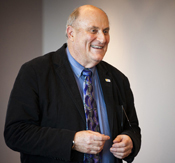
Fred Sanfilippo, MD, PhD

Fred Sanfilippo, MD, PhD, executive vice president for health affairs at Emory, CEO of Emory’s Woodruff Health Sciences Center and chairman of Emory Healthcare, says, “There is an ever-changing cycle of shortages. Advances in technology and treatment can reduce or increase demand for specialists needed in one area or another much more quickly than it takes to train or absorb them.”

For instance, the demand for cardiac surgeons has slowed dramatically as a result of better medications and stents. Changes in insurance and Medicare/Medicaid reimbursement can also impact specialties, he says.

“Since medical school graduates now carry so much debt, the specialty they choose is often influenced by potential income, which is most evident in the low numbers going into primary care.”


Read more…

Improving measurement of pesticides in breast milk

March 8, 2010

Little is known about the exposure of infants to pesticides, despite their vulnerability and evidence of widespread dietary exposure among older children and adults. A study led by Emory Rollins School of Public Health researchers P. Barry Ryan, PhD, and Anne Riederer, ScD, seeks to improve methods for measuring pesticides in breast milk and infant formula.

“We really don’t know about how babies are exposed to pesticides in their everyday life,” says Riederer, assistant research professor, Department of Environmental and Occupational Health. “There are very few published studies on this topic, and we’d like to be one of the groups that actually publishes an analytical method that can be used by researchers in any country to be able to detect these different types of pesticides in breast milk.”

Although the breast milk method will be pilot tested on samples collected from a birth cohort in Thailand, it will have broad applications for the U.S. population. Because these pesticides are widely distributed in the food supply, all U.S. infants are potentially exposed.


Read more…

University global alliance partners with Rollins

March 4, 2010

Rollins School of Public Health

Emory’s Rollins School of Public Health is one of five organizations that have joined to form the University Global Alliance Program (UGAP).

The initiative, launched March 2 by the Northrop Grumman Corporation, aims to unite higher education and the private sector to accelerate the application of thought leadership to global public health informatics, policy development, strategic planning, programmatic implementation and evaluation.

In addition to Emory, the UGAP alliance includes The Satcher Leadership Institute of the Morehouse School of Medicine, Georgia State University, the Georgia Institute of Technology and the Colorado School of Public Health. The universities were chosen for their innovative research in public health and their interest in advancing public health practice through applied technology and informatics.


Read more…

Chronic diseases drive up Medicare costs, study shows

February 23, 2010

A new study by Emory University public health researchers finds that outpatient treatment for chronic diseases such as diabetes, hypertension and kidney disease are to blame for the recent rise in Medicare spending. Kenneth Thorpe, PhD, chair, Health Policy and Management, Rollins School of Public Health, presented study findings today at a briefing of the National Press Club in Washington, DC.

The report, “Chronic Conditions Account for Rise in Medicare Spending from 1987 to 2006,” was published Feb. 18 by the journal Health Affairs.

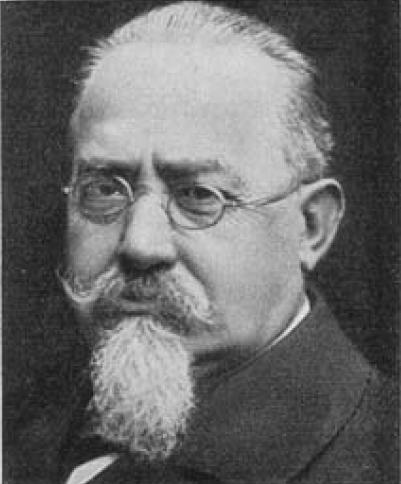
Kenneth E. Thorpe, PhD

Thorpe and colleagues analyzed data about disease prevalence and about level of and change in spending on the 10 most expensive conditions in the Medicare population from 1987, 1997 and 2006.

Among key study findings:

  • Heart disease ranked first in terms of share of growth from 1987 to 1997.  However, from 1997 to 2006, heart disease fell to 10th, while other medical conditions – diabetes the most prevalent – accounted for a significant portion of the rise.
  • Increased spending on diabetes and some other conditions results from rising incidence of these diseases, not increased screening and diagnoses.


Read more…

Experts review global health care programs for answers

January 19, 2010

A recent Knowledge@Emory article looks at a new book titled The Healing of America: A Global Quest for Better, Cheaper, and Fairer Health Care, by author and journalist T.R. Reid. The book provides an in-depth look at the health care systems in a number of Western nations, including Germany, France, the U.K, Japan and Canada. The countries he profiles offer a mix of public and semi-public health care options.

In addition to interviewing Reid, experts from Emory Healthcare, Emory’s Woodruff Health Sciences Center and the Rollins School of Public Health Department of Health Policy and Management, weigh in on the problem of U.S. health care reform and what can be learned from the examples abroad.

Joseph Lipscomb, PhD

According to Joseph Lipscomb, PhD, a Georgia Cancer Coalition Distinguished Cancer Scholar and a professor in the Department of Health Policy and Management, quality of care, outcomes and cost analysis must be factored into the reform process. Looking abroad, Lipscomb gives generally high marks to the outcome and cost analysis done by the National Health Service and the National Institute for Health and Clinical Excellence (NICE) in the U.K. He applauds NICE’s ongoing efforts to estimate the cost-effectiveness of new, expensive technologies by using decision processes that are transparent and solicit input from private citizens, providers and industry.


Read more…

Students and faculty aid CDC for H1N1 response

October 27, 2009

Last spring, as H1N1 avian influenza spread across the globe, the Centers for Disease Control and Prevention put out a call asking students to assist. Within three days, 85 students from Emory’s Rollins School of Public Health (RSPH) had volunteered.

RSPH students Nick Schaad (left) and Michael Marrone

RSPH students Nick Schaad (left) and Michael Marrone

Nick Schaad was among the students authorized to help man the CDC’s Emergency Operations Center at the height of the novel H1N1 outbreak. Once the CDC began to identify influenza clusters, students began conducting phone surveys.

Schaad says he was involved in the St. Francis prep school survey in New York. Students and staff member who were sick with any flu-like symptoms were identified. The team called them and asked about the size of their household, what they might have done to protect themselves, and any recent travel. The goal was to learn as much possible about H1N1 in advance of the fall flu season.

Like the students they teach, RSPH faculty became engaged in the H1N1 epidemic. Last spring, Emory physician and microbiologist Keith Klugman, MD, PhD, was recruited to join the CDC’s Team B, which includes experts from outside the CDC to quickly review and inform the agency’s efforts. CDC created Team B in the early 2000s to cope with the growing complexity of public health emergencies.

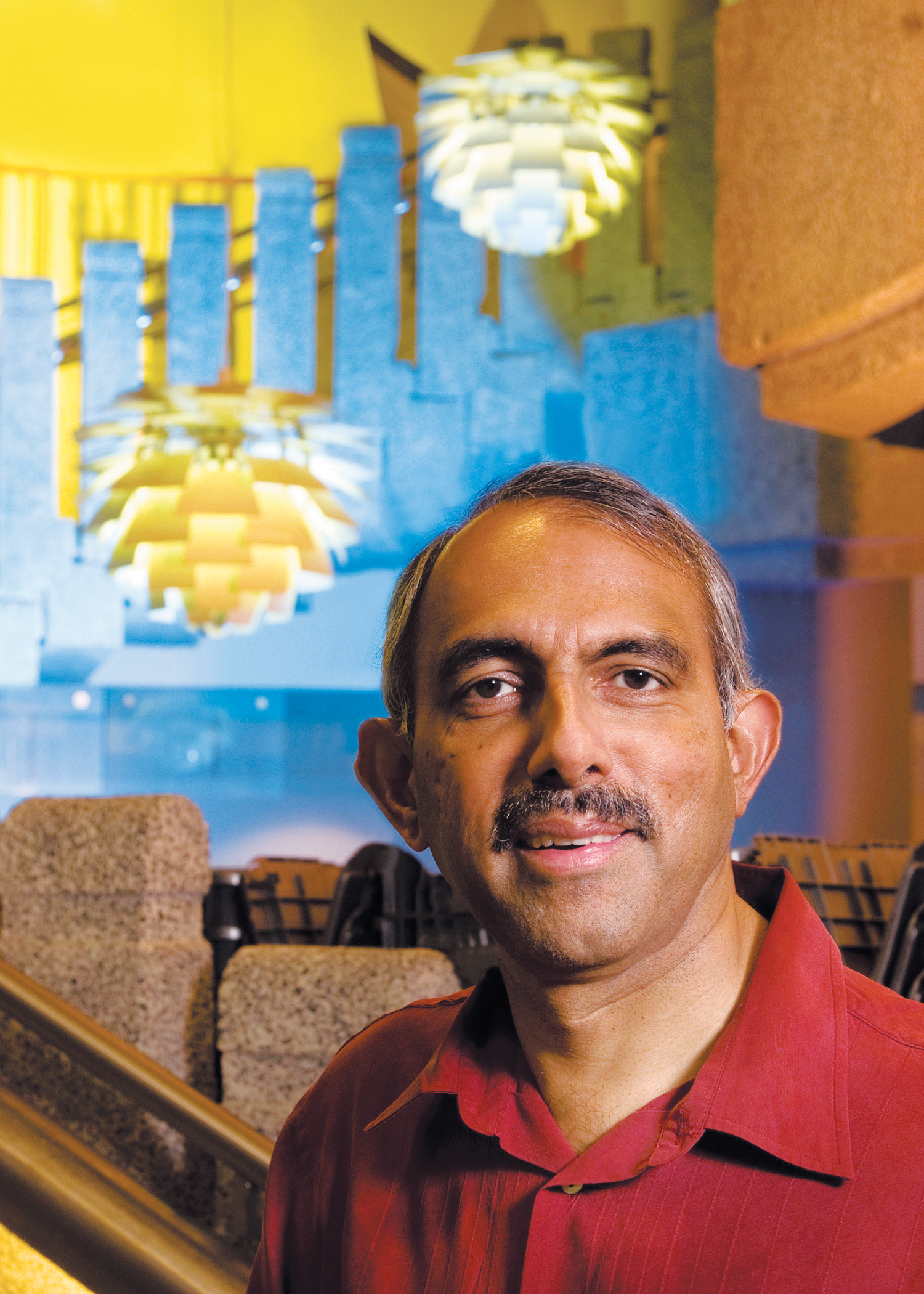
Keith Klugman, MD, PhD

Keith Klugman, MD, PhD

Klugman says his role included the bacterial complications of influenza. Evidence from 1918, notes Klugman, clearly shows that the great majority of deaths were due to bacterial complications of the flu. In other words, the flu itself could occasionally cause death on itss own. But it caused death mostly by facilitating a synergistic lethality between itself and bacteria.

Although much has changed since 1918, the bacteria that caused so many deaths still exist but are susceptible to antibiotics.

Klugman notes the evolution of the flu. He says so far it’s generally been moderate. However, by mixing with the circulating flu in the Southern Hemisphere, it could mutate and become resistant to the first line of flu drugs. It could also become more severe. Says Klugman, “We must remain ever vigilant.”